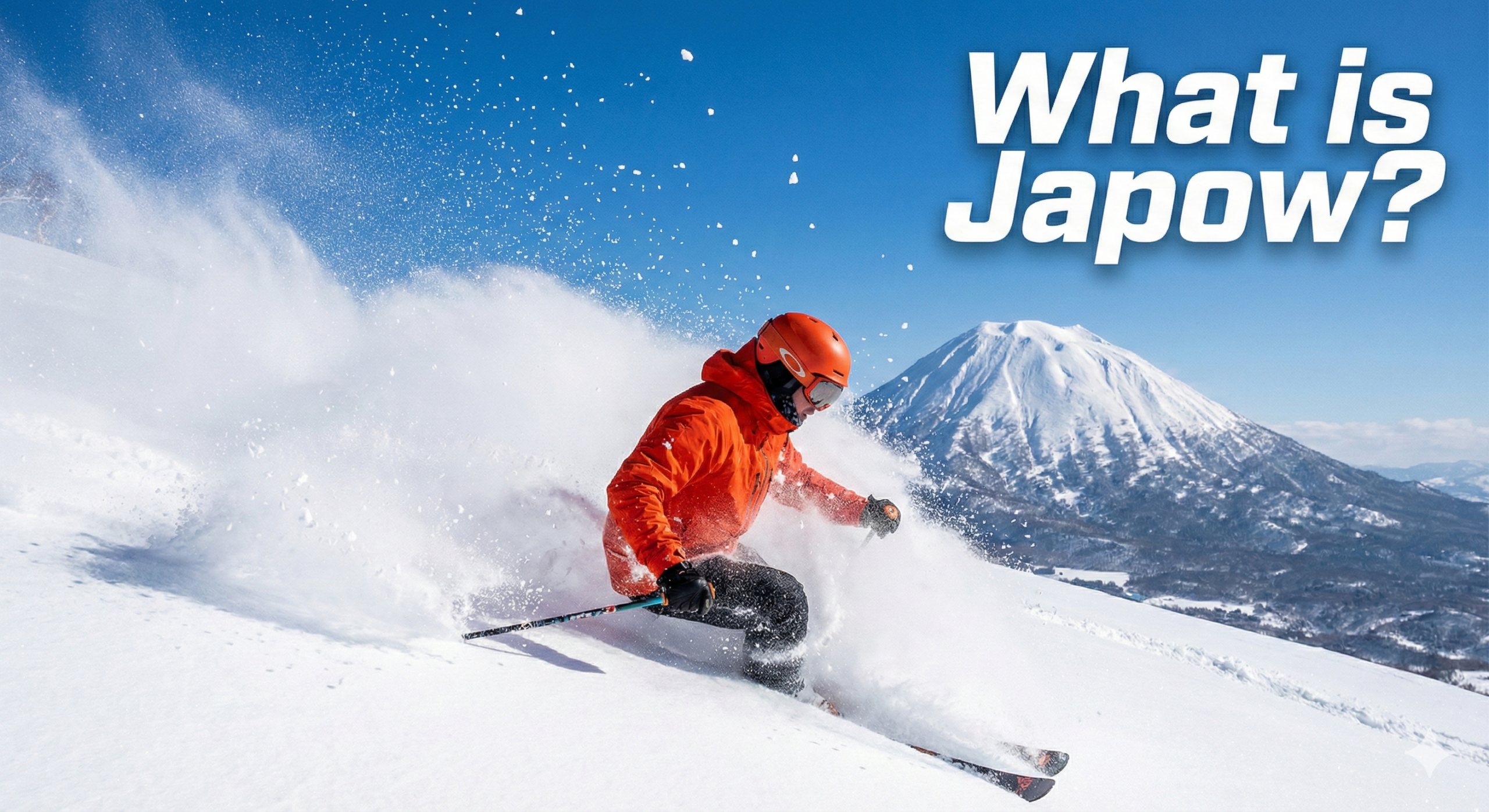
So, you’ve heard the rumors. You’ve seen the Instagram clips of skiers disappearing into white clouds. And now you’re wondering:
“Is Hokkaido powder really that good?”
Short answer:
Yes. It is better than you imagine.
Long answer: Welcome to the world of
Japow. In this guide, I’m going to break down exactly what makes Hokkaido snow unique, where you should go, and how to survive your first trip to the powder capital of the world.
The Science of Japow: Less Moisture, More Air
“Japow” isn’t just a marketing term; it’s meteorology. Hokkaido sits in the perfect geographical sweet spot. Cold, dry winds blow from Siberia across the Sea of Japan. As this air crosses the water, it picks up moisture, forms clouds, and then hits the mountains of Hokkaido, dumping massive amounts of snow.
But here’s the secret:
The temperature. Because it’s so consistently cold (often -10°C to -15°C), the snowflakes don’t melt or clump together. They remain individual crystals.
- Moisture Content: Hokkaido snow often has less than 5% water content.
- Comparison: Snow in the Alps or Sierra Nevada usually has 10-15% water content.
- The Result: “Bottomless” powder that feels like floating. You don’t ski on it; you ski in it.
Where to Go: Niseko, Rusutsu, or Furano?
Hokkaido has over 100 ski resorts, but these three are the “Big Three” for international travelers.
1. Niseko United: The International Giant
Niseko is actually four resorts connected at the summit: Grand Hirafu, Hanazono, Niseko Village, and Annupuri.
- Pros: Massive terrain, incredible nightlife (Hirafu feels like an Australian town), English is spoken everywhere.
- Cons: Crowded, expensive accommodation, powder gets tracked out by 10 AM.
- Best for: First-timers, nightlife lovers, and groups who want luxury.
2. Rusutsu Resort: The Tree Run Paradise
Located just 40 minutes from Niseko, Rusutsu is a different world. It’s famous for its perfectly spaced tree runs and incredible lift infrastructure.
- Pros: Virtually no lift lines, some of the best in-bounds tree skiing in the world, ski-in/ski-out hotels.
- Cons: Very little nightlife (you’re stuck in the hotel resort), difficult to explore without a car.
- Best for: Serious riders who care more about snow than partying.
3. Furano: The Deep Freeze
Located in central Hokkaido, Furano gets colder than the coastal resorts. This means the snow is even lighter and drier.
- Pros: Authentic Japanese town vibe, cheaper food and lodging, super dry snow.
- Cons: Far from Sapporo (2-3 hours), can be brutally cold.
- Best for: Those seeking a real Japanese cultural experience alongside skiing.
Gear Guide: Leave Your Carving Skis at Home
This is the most common mistake rookies make. They bring their skinny racing skis (70mm waist) and sink like a stone. In Japow, you need
floatation.
Recommendation:
- Skis: Waist width of 100mm to 120mm. Rocker profile is a must.
- Snowboard: A directional powder board with a set-back stance (like a Gentemstick) will change your life.
Après-ski: Ramen & Seicomart
After a day of riding, you need fuel. In Hokkaido, that means
Miso Ramen or
Soup Curry.
And don’t forget
Seicomart. This is Hokkaido’s local convenience store chain. Their “Hot Chef” section serves freshly made Katsudon (pork cutlet bowls) and Onigiri that are better than some restaurants. It is the lifeblood of every local skier.
Final Verdict
If you love snow, you owe it to yourself to visit Hokkaido. It’s not just a ski trip; it’s a pilgrimage. The food, the onsen (hot springs), and the bottomless powder combine to create an experience you will never forget.
See you on the mountain. 🏂
コメント