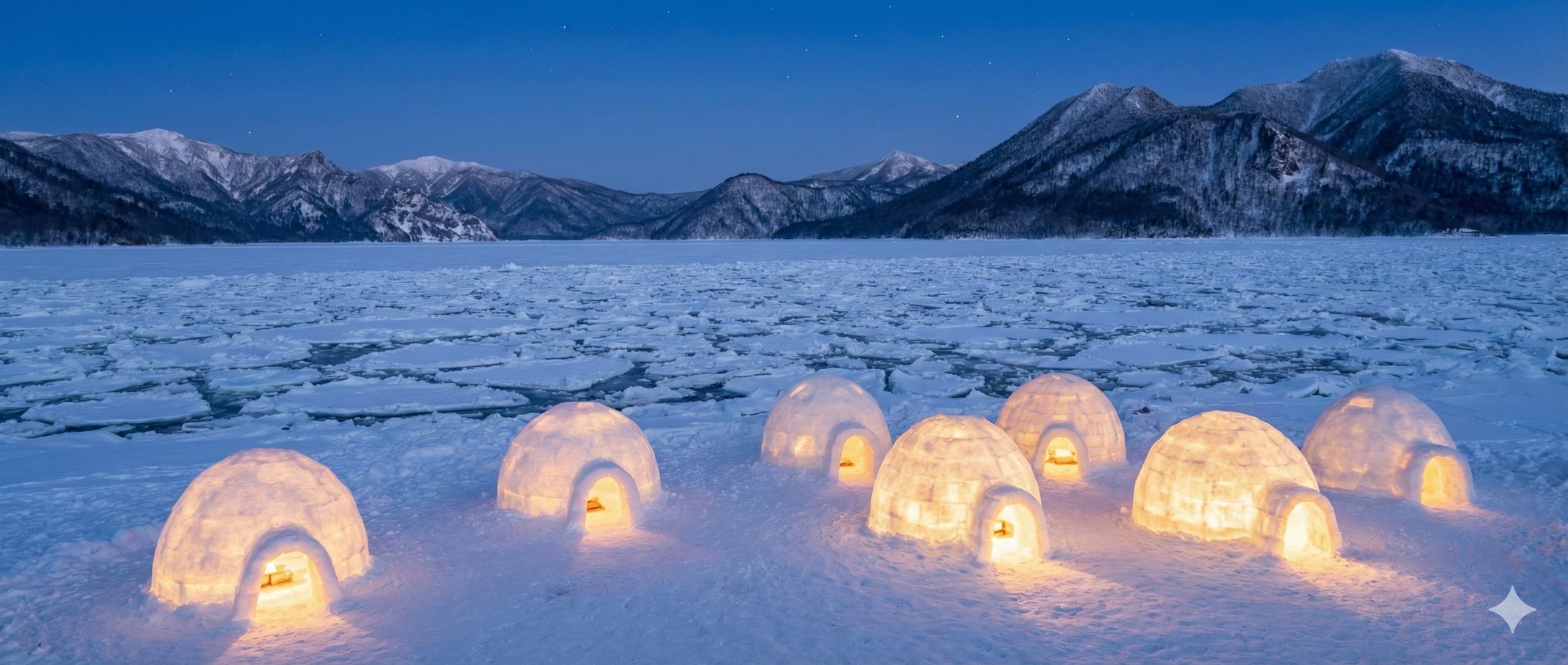
As February fades into March, Hokkaido offers one final, spectacular frozen curtain call before spring arrives. If you’re in Hokkaido right now—or planning a last-minute trip for early March 2026—you are just in time for two of the island’s most surreal experiences: the Okhotsk Drift Ice and the Lake Shikaribetsu Igloo Village.
Most tourists flock to Sapporo for the Snow Festival in early February, but the real wild Hokkaido magic happens now, when the sea turns white and villages appear on frozen lakes. Here is your local guide to catching these fleeting icy wonders.
1. Walking on Water: The Okhotsk Drift Ice (Ryuhyo)
Every winter, massive sheets of ice drift down from Russia’s Amur River, crossing the Sea of Okhotsk to crash into Hokkaido’s northern coast. This is the Drift Ice (Ryuhyo), and it is a bucket-list phenomenon.
When to Go?
Right now. The prime season usually peaks in mid-to-late February. By mid-March, the wind often shifts, blowing the ice back out to sea. In 2026, the ice has been spectacular, but warm spells are becoming more frequent. Dont wait.
How to Experience It
- The Easy Way (Abashiri): Hop on the icebreaker ship Aurora. It crunches through the ice, offering a comfortable view. If you are lucky, you will see Steller’s Sea Eagles resting on the floes.
- The Wild Way (Shiretoko): Go to Utoro (Shiretoko Peninsula) for a “Dry Suit Walk.” Guides take you out onto the unstable ice. You actually walk on the frozen sea, and if you slip between the cracks, your dry suit floats you like a cork. It is terrifyingly fun.
Local Tip: Check the “Ryuhyo Navi” website for daily ice position updates before you board the train to Abashiri.
2. The Phantom Village: Lake Shikaribetsu Kotan
Deep in central Hokkaido, Lake Shikaribetsu freezes solid. Solid enough to build a village on.
The Shikaribetsu Kotan is an ephemeral village made entirely of ice and snow. It exists only from late January to mid-March. When spring comes, the entire village melts and sinks back into the lake.
Why You Can’t Miss This
- Ice Bar: Sip cocktails from a glass made of ice, inside a building made of ice.
- Open-Air Onsen on Ice: Yes, really. There is a hot spring bath built on top of the frozen lake. Stripping down in sub-zero temps to jump into steaming water while looking at a white expanse is the ultimate Hokkaido flex.
Status Check (Feb 2026): The Kotan is scheduled to remain open until mid-March, but always check local weather advisories. If it gets too warm, they close early for safety.
3. Spring Skiing: The Secret Season
While the powder hounds chase “Japow” in January, March offers something else: Bluebird days. The harsh blizzards calm down, the sun comes out, and the vibe shifts to relaxed, sunny skiing.
Niseko and Rusutsu are great, but for a more local vibe in late season, try Kiroro or Sapporo Teine. They hold their snow longer due to altitude and orientation. Plus, lift tickets are often cheaper in the spring season.
Final Advice for Late Winter Travelers
Hokkaido in late February/early March is a transition zone. You might get a blizzard one day and rain the next. Pack layers. Waterproof boots are non-negotiable (the streets turn to slush). But don’t let that stop you. This is your last chance to see the frozen heart of Hokkaido before the cherry blossoms wake up.
See you on the ice!


コメント